
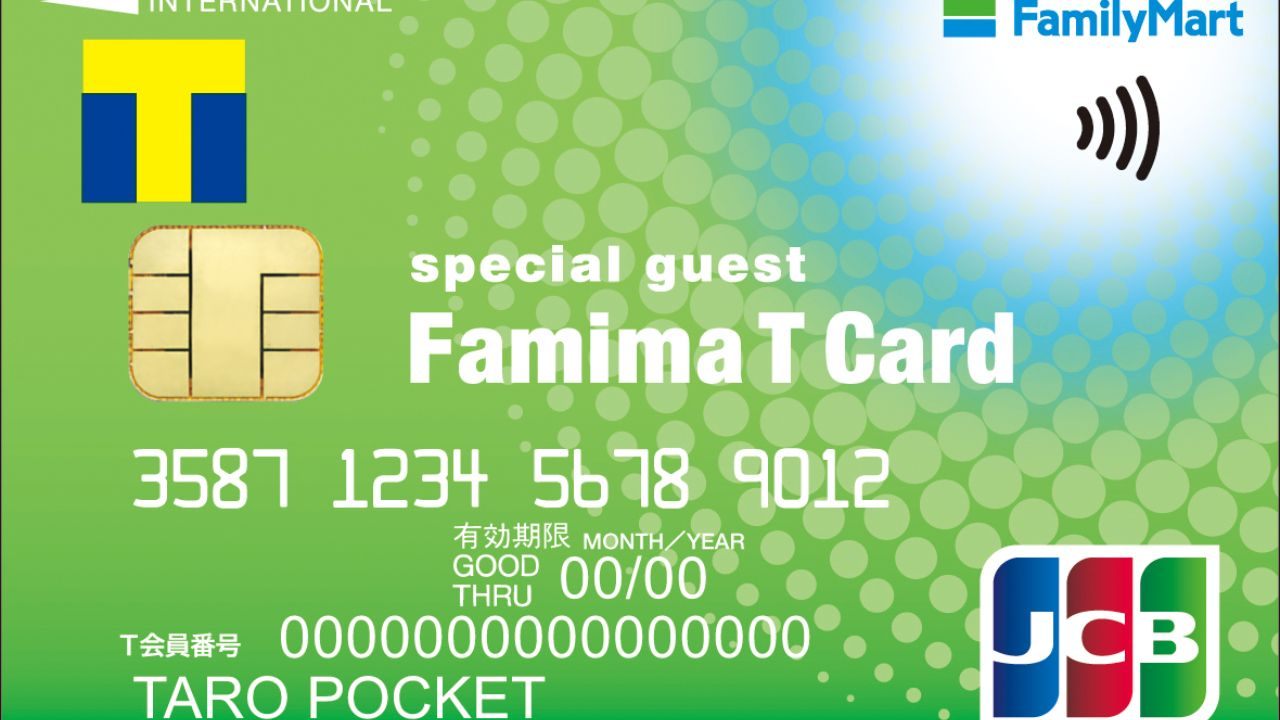
For shoppers in Japan who want a store-linked card with a simpler rewards model, the FAMIMA credit card has an obvious draw.
The FAMIMA credit card is built around statement discounts rather than a points system, which makes the savings easier to see but also puts more weight on how the balance is managed.
That balance between convenience and cost is what makes the card worth a closer look before applying.
Why The FAMIMA Credit Card Gets Notice
Pocket Card presents this product as a discount-first card, and that framing shapes the entire experience.
Instead of asking users to track points, redeem rewards, or worry about expiration, the issuer applies the benefit directly to the billed amount.

That approach gives the card a practical feel that will appeal to shoppers who prefer visible savings over reward-program mechanics. For frequent FamilyMart customers, that difference is central to the card’s appeal.
FamilyMart Purchases Deliver The Strongest Value
The biggest attraction is at FamilyMart itself. According to the official card site, purchases at FamilyMart can receive up to 5% off when the card is linked with Famipay.
If the card is used at FamilyMart without that linkage, the discount is 3% off instead. The issuer also makes clear that some products, services, and payment methods are excluded, so the top discount is meaningful but not universal across every transaction.
Spending Outside FamilyMart Still Brings A Discount
The card is not limited to one retail chain. Pocket Card says purchases made outside FamilyMart receive 1% off at billing, and the official site specifically mentions utility payments and overseas shopping as examples within that framework.
That gives the card a wider role than a narrow store-only product. Even so, the issuer again notes that some transaction types fall outside the discount treatment, which means the details still matter.
How The Discount Model Works In Daily Use
One reason the card feels different from many mainstream credit cards is that the issuer does not prioritize point accumulation.
Pocket Card repeatedly emphasizes that the discount appears directly on the statement. For some users, that can feel more practical than a conventional rewards system because there is nothing to convert, redeem, or keep track of later.
The value is meant to show up automatically rather than through a separate loyalty step.
Billing Discounts Replace The Usual Point Management
Pocket Card explicitly says there is no need for point management because the savings are reflected automatically in the billed amount.
The site also notes that there is no expiration problem in the same way a points-based card can create, since the benefit is applied directly rather than stored as a reward balance.
That makes the product easier to understand for users who want a card that works quietly in the background rather than one that requires ongoing reward decisions.
FamilyMart Store Payment Adds Another Practical Benefit
The card also offers a repayment option that is unusual enough to matter. Pocket Card says cardholders can pay their usage amount at FamilyMart stores even without registering a bank account, as long as the location has an MMK terminal.
That FamilyMart store payment feature does not change the card’s underlying credit cost, though it does make repayment more accessible for people who prefer store-based payment instead of relying only on account withdrawal.
In practical terms, it extends the FamilyMart link beyond shopping alone.
What The Payment Structure Means For Costs
This is the part of the product that deserves the most attention from readers who care about credit-card charges, not just retail savings.

Pocket Card explains that the FAMIMA Card is a flexible-payment card, meaning the monthly payment can be adjusted as long as it stays above the required minimum.
That can be useful, but it also means the card should not be judged only by its discount claims. The repayment structure determines whether the savings remain meaningful.
Paying In Full Early Keeps The Card More Attractive
Pocket Card states that if the full shopping balance is paid by the first payment due date, no fee is charged. The same explanation appears in the guidance for both the in-store payment course and the bank-account withdrawal course.
That is the most important cost-control feature attached to the card. For users who clear the balance quickly, the discount model remains intact. For users who do not, the value calculation changes immediately.
Carrying A Balance Brings An 18.00% Annual Charge
Once the balance is not fully repaid by that first due date, the card’s economics change. Pocket Card’s payment materials show a shopping revolving charge of 18.00% effective annual rate.
The same page also explains that the card uses two payment courses, a store payment course and a bank-account withdrawal course, and that users can pay the minimum, increase the amount, or pay the full balance. The flexibility is real, but so is the cost of carrying balances.
The Minimum Payment Rules Deserve A Careful Read
Flexible-payment cards can look simple until the minimum-payment structure is examined.

Pocket Card publishes balance-based minimums rather than one fixed monthly amount, which means the required payment rises in steps as the outstanding balance grows.
That matters because the card’s savings story is strongest for disciplined repayment. Once users begin carrying larger balances, the required minimum and the revolving charge become much more important than the store discount.
Standard Minimum Payments Rise As The Balance Increases
Pocket Card’s payment page shows that under the standard minimum-payment course for shopping balances, the ¥3,000 minimum payment applies to balances from ¥1 to ¥100,000, while ¥4,500 applies to ¥100,001 to ¥150,000 and ¥5,000 to ¥150,001 to ¥200,000.
The amount continues rising in stages, reaching ¥30,000 for balances from ¥950,001 to ¥1,000,000, and then increasing by ¥1,500 for each additional ¥50,000 after that. Those figures make clear that the card is built around staged revolving-style repayment rules.
A Smaller Payment Course Exists, But The Cost Logic Stays The Same
Pocket Card also shows a separate lower minimum-payment table for the small-payment course.
That may sound more manageable at first, though it does not change the larger issue: once a shopping balance is carried beyond the first payment point, the 18.00% effective annual rate applies.
The lower monthly requirement may ease short-term pressure, but it can also lengthen repayment. For anyone interested in credit discipline, this is where the card’s discount story needs to be weighed against borrowing cost.
How To Apply For The FAMIMA Credit Card
The application path is one of the clearer parts of the product. Pocket Card lays out the issuance process in four official steps, which helps the card feel more transparent than many store-linked credit products.
The process starts online, moves through identity verification and screening, and ends with delivery. That structure does not guarantee approval, but it does tell applicants what to expect before they begin.
The Official Process Starts Online And Moves In Four Steps
The sequence begins with entering application information after agreeing to the membership terms. Step two is identity verification, step three is screening, and step four is card delivery.
Pocket Card says the card is generally shipped in about two weeks after the application is completed.
The issuer also notes that if identity verification has been completed, the card is sent by simplified registered mail, while incomplete verification leads to restricted-delivery mail.
Identity Verification And Screening Are Real Parts Of Approval
Pocket Card says identity verification can be completed through smartphone verification using eKYC, through document-image upload, or through restricted-delivery mail.
The issuer also states that bank-account identity verification is not supported. It further notes that contact may be made to the applicant’s home, mobile phone, or workplace to confirm information, and that some applications may not pass screening.
In other words, this is a formal credit application, not a simple store sign-up.
The Main Service Desk Handles General Card Questions
For general inquiries, the official support page lists the FAMIMA Card Service Desk at 0570-064-230 for mobile users and 0120-230-553 for non-mobile callers.
Company information published in official Pocket Card materials places its headquarters at Sumitomo Fudosan Onarimon Tower, 1-1-1 Shibakoen, Minato-ku, Tokyo 105-0011.
Conclusion
The FAMIMA Card makes the strongest case for itself when it is treated as a discount-driven retail card with flexible repayment, not as a conventional rewards card.
Its most attractive features are easy to identify: stronger savings at FamilyMart, automatic statement discounts, and the convenience of repayment at FamilyMart stores.
Note: There are risks involved when applying for and using credit. Consult the bank’s terms and conditions page for more information.